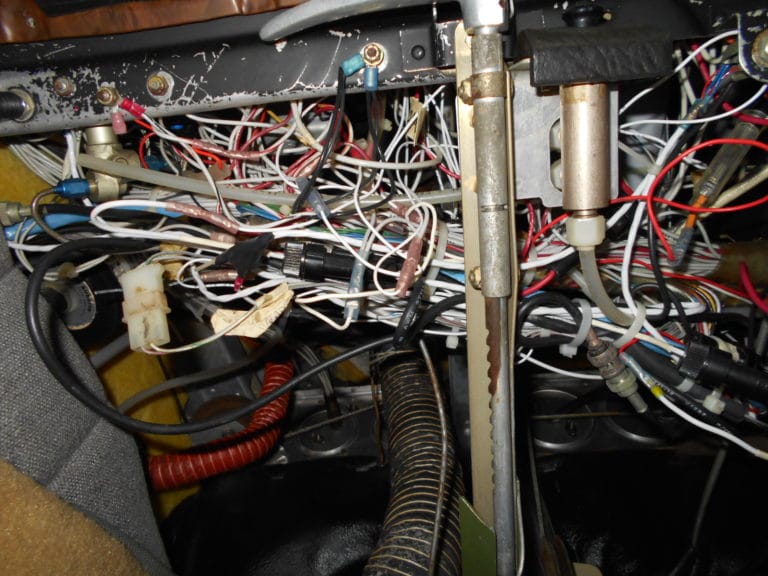
1. Remove and secure all documents
and personal items.
2. Using temporary foam pieces, locate the lumbar, thorax and
thigh support with customer sitting in
existing seating.
3. Cincinnati Avionics will test radios,
intercom, autopilot, electrical components and lights for function.
Findings and recommendations will be communicated to the customer.
4. Remove and evaluate existing side panels, seats, headliner,
carpet, insulation, floor inspection
panels and window trim.
5. Inspect all structures and skins for corrosion. Remove corrosion
and glue from inner cabin skins, spar carry-through and related components.
Chromate all inner surfaces and appropriate components with self-etching
chromate (see note at at end regarding removal
of corrosion)
6. Clean all exposed antenna connections; inspect all systems and controls.
Notify customer of any problems, and correct
per customer's request.
7. Strip seats to bare frames, perform a complete mechanical and structural inspection,
and repair as required.
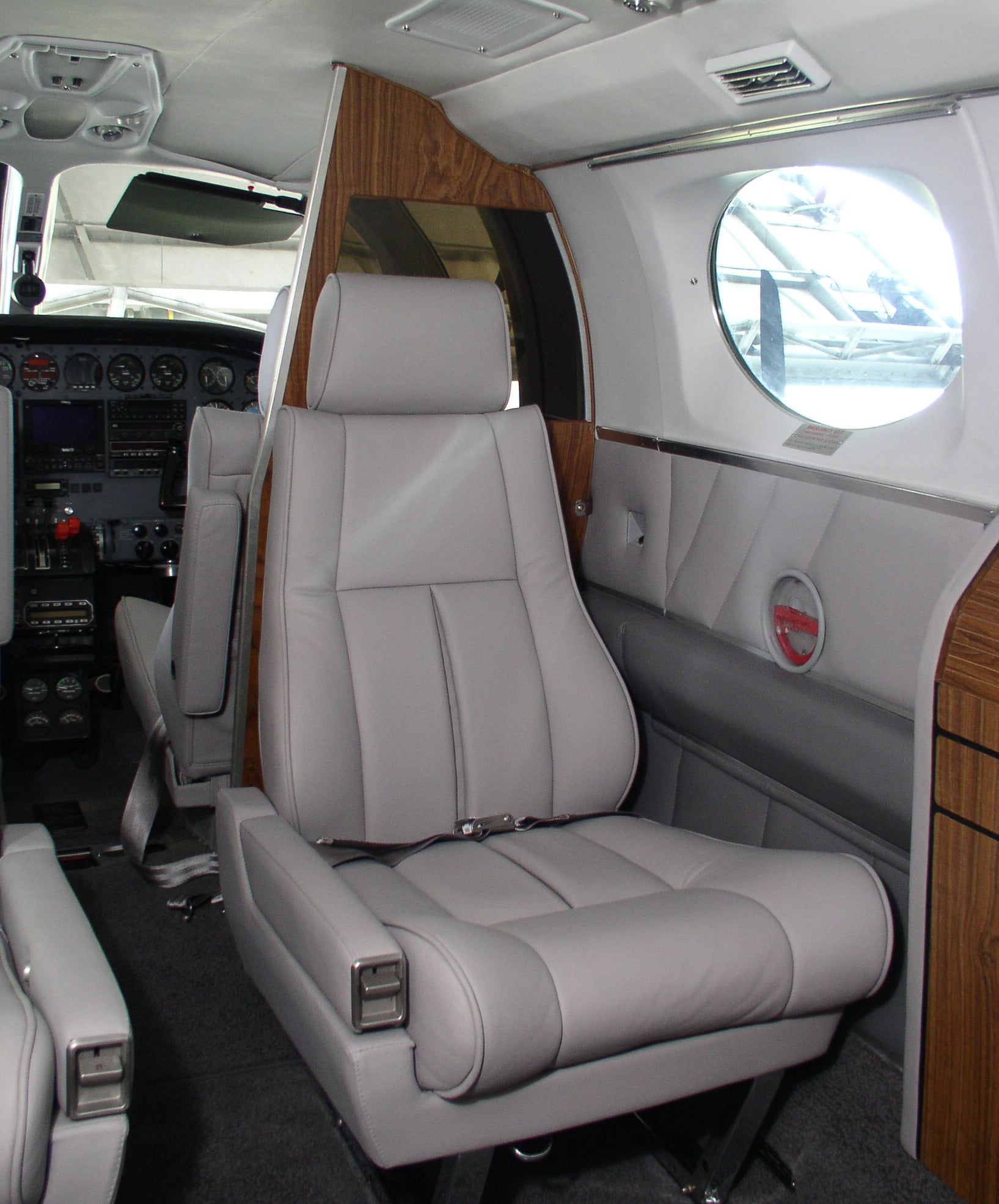
8. Install heavy sling reinforcement straps on seat frames and reinstall
the original seat sling. This keeps the sling from stretching or coming
loose from the frame, and eliminates future sagging.
9. Build the height of the seat back structure to accommodate the stature
of the customer (many of our customers choose
this as an alternative to headrests).
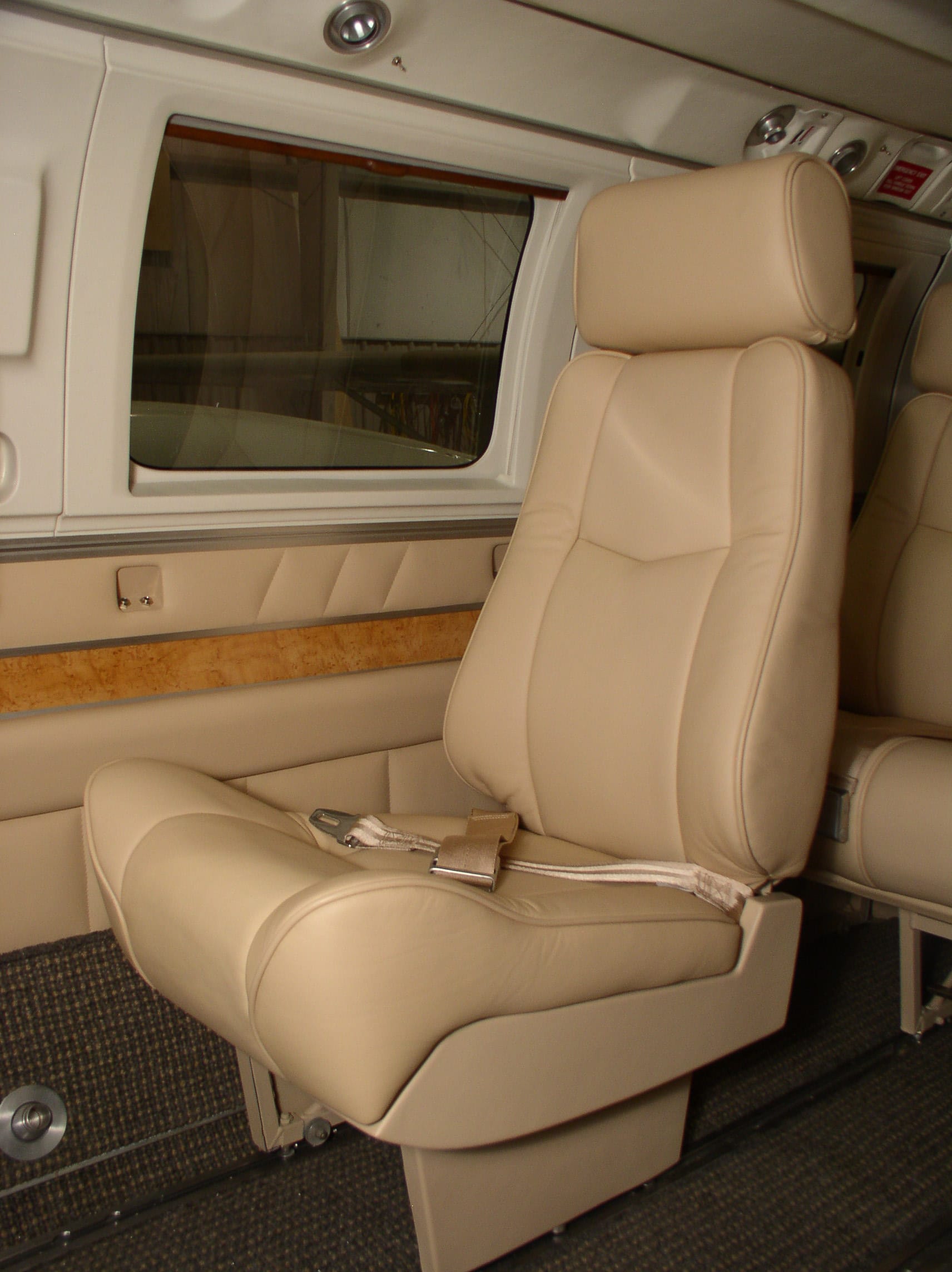
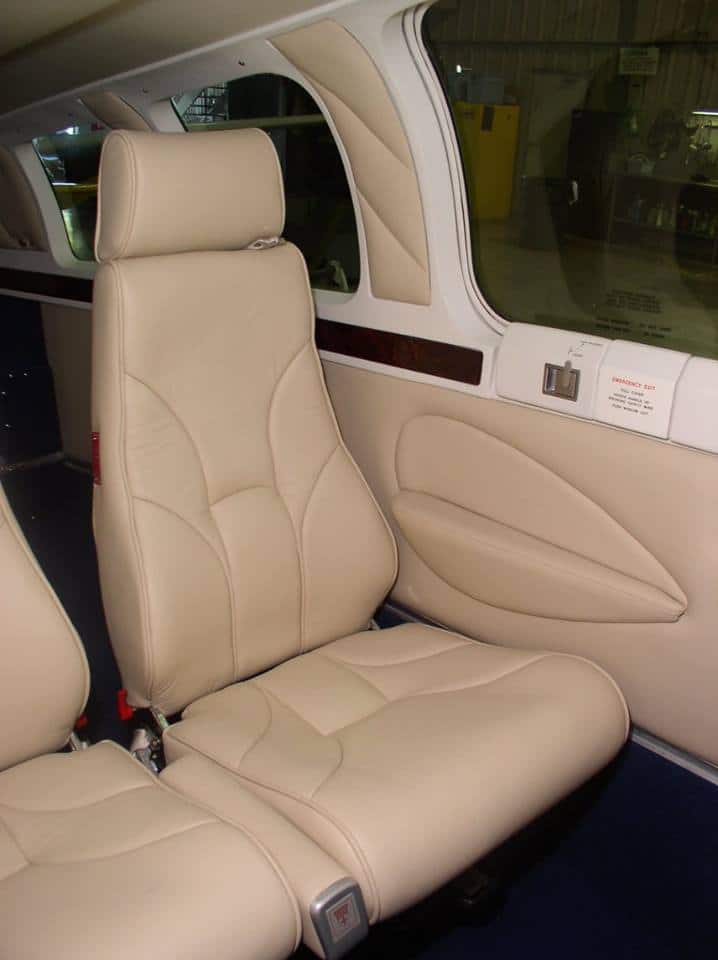
10. Build new seat foam, shaping with several densities of flame retardent
urethane foam. The new foam is contoured
to fit the customer as determined by measurements
taken earlier.
11. Clean, mask, prime, and paint all seat frames to match the new
interior color scheme.
12. Sew and fit the new seat upholstery. Tufting is done with hidden
sewn-in rods and pulls to
insure long-term structural integrity, eliminating sagging and shifting.
All seams are
double
lock stitched to prevent splitting.
All seat panels have backing foam
and backing fabric to insure proper fill.
13. Strip side panels to bare metal. Factory cardboard panels are replaced
with new .020" aluminum panels;
metal panels are repaired to be like-new condition, or made
new.
14. Temporarily install the non-upholstered panels. Check for fit and
lay out the new design; modify if necessary to insure ease of installation
and removal when upholstered. Fill
in ashtray holes if requested.
15. Sew and mount side panels using new high-density, flame retardent backing
foam.
16. Repair, prep, paint and placard all interior plastic trim (please
see note at bottom).
17. Clean, mask, sand, fill and paint all door frames and related interior
airframe trim with custom matched
interior paint.
18. Install new multi-density insulation behind side panels, in doors
and behind headliner.
19. Clean below floors and behind rudder panels as required.
20. Clean all seat tracks. Buff or paint heater outlets and similar components.
21. Install new windlace cord on doors. Install reupholstered side
panels using new chrome or painted
hardware.
22. Strip headliner panels, and repair or replace as required. Plastic
headliners are re-formed and reinforced
to prevent future sagging or warping.
23. Fit, sew and install new headliner and sunvisors.
24. Cut and fit new carpets for cabin floor, baggage compartment and
related surfaces. Special attention
is given to allow for easy removal and reinstallation without
removal of seats.
25. Serge all carpet edges; sew on velcro and heel pads. Insulate
the underside of the floor carpets
with heavy density, flame-retardent foam.
26. Bond velcro to floors, install new carpet.
27. Install new re-webbed seatbelts and shoulder harnesses.
28. Install all cabin seats; lubricate all door latches and seat latches.
29. Pre-delivery safety and function check: 25 items covering the complete
interior, radios, flight controls
and electrical components, including a final check by Cincinnati
Avionics.
30. An A & P mechanic will make necessary logbook entries and weight
& balance changes, and check
that all placards are in place.
31. Ground run aircraft to prepare for customer delivery
The
following items are not included in the quoted price of a standard
interior, but are available on a time & materials basis:
repair or replacement of plastic trim
painting and placarding of instrument panel, pedestal
& circuit breaker
panels
glareshield modification, repair and upholstery
repair or replacement of damaged floor boards
extra map cases, storage boxes, cup holders, gooseneck maplights
re-webbing of existing shoulder harnesses and lap belts
installation of new harnesses and lap belts
window installations
REGARDING CORROSION: Due
to the wide range of conditions hidden by the interior and insulation,
the necessary removal of glue and corrosion prior to the application
of zinc chromate is done on a time & materials basis and billed
at half shop rate.